All posts by Daberechi →
Genotype Testing: Informed love is powerful love.
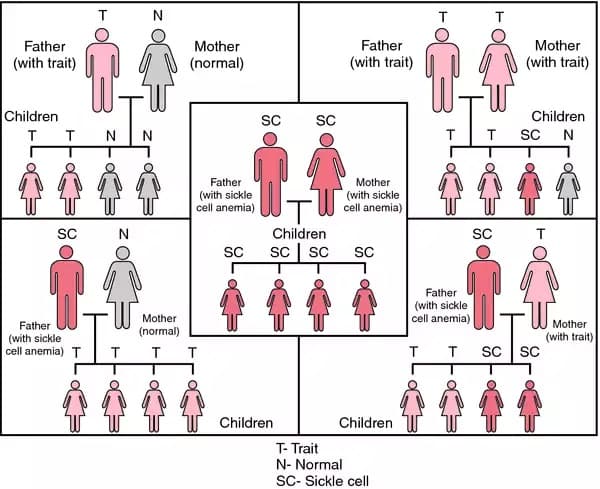
When it comes to sickle cell, many people don't fully understand the power of one simple test, a genotype test. For my family, like many others, the realities of genotype compatibility didn't become clear until after marriage when a foetus had already been formed.
My parents didn't know they both carried the sickle cell gene (AS) and went on to have 5 children. They had their first born my older brother, who turned out to be a carrier. They then learned the implications of their genetic combination, the 25% chance with every pregnancy of having a child with sickle cell anaemia (SS).
Despite the medical probabilities, my parents (strong Christians with deep faith) left the outcome of each child to God. And so their second child (me) was born with sickle cell. And named (Daberechi which means Lean on God). The two children after me were carriers, and the youngest had no trace of the sickle cell gene (AA). It was a full spectrum of what AS+AS could create.
Many couples overlook genotype compatibility because "love will find a way." And while that sentiment is romantic, reality has a way of testing even the strongest relationships, especially when a child is born with a chronic illness like sickle cell.
The rhythm of your life, rewritten.
Having a child with sickle cell can completely change the rhythm of your life. It's not just about hospital admissions and medical appointments. It's about a daily reality that requires emotional resilience, financial stability, and strong communication between partners.
All of this can quietly and steadily drain the love between two people, leaving behind resentment, guilt, or silence. If you're not careful, it can suck the idea of what love looks like right out of your relationship.
“
Genotype testing is not a burden; it's a gift of knowledge. A step of wisdom, not fear.
Having a child is a beautiful and life-changing experience. But having a child with a serious illness adds another layer of responsibility, one that should be entered into with both eyes open. That's why prevention is better than cure.
Genotype testing gives you the ability to make informed decisions out of love, not just emotion. Looking back, this is why I believe genotype testing should be part of everyday conversation, especially before relationships become serious or decisions about having children are made.
Informed love is powerful love.
In today's world, love is often seen as the ultimate deciding factor in relationships, and rightly so. Love is powerful. But love, on its own, is not always enough when it comes to building a future together.
This post isn't here to scare you; it's here to empower you. Genotype testing is a simple step that can save you and your future children from years of pain, confusion, and heartache. It doesn't mean you love your partner any less; it means you're loving wisely, intentionally, and with your eyes open even if that means you have to go your separate ways.
Whether you're single, dating, or already in a relationship, it's never too early (or too late) to know your genotype and start important conversations. You deserve to build a future with confidence, not fear or uncertainty.
If you're not sure how to get tested or would like help finding a testing centre near you, we're here to support you. Email us at SickleFES@gmail.com, judgement-free and fully confidential. Because when it comes to sickle cell, awareness is protection, and informed love is powerful love.
· · ·